
Walking the Road as a Coach Developer

Inspired by Seneca, for those who develop others (2025)
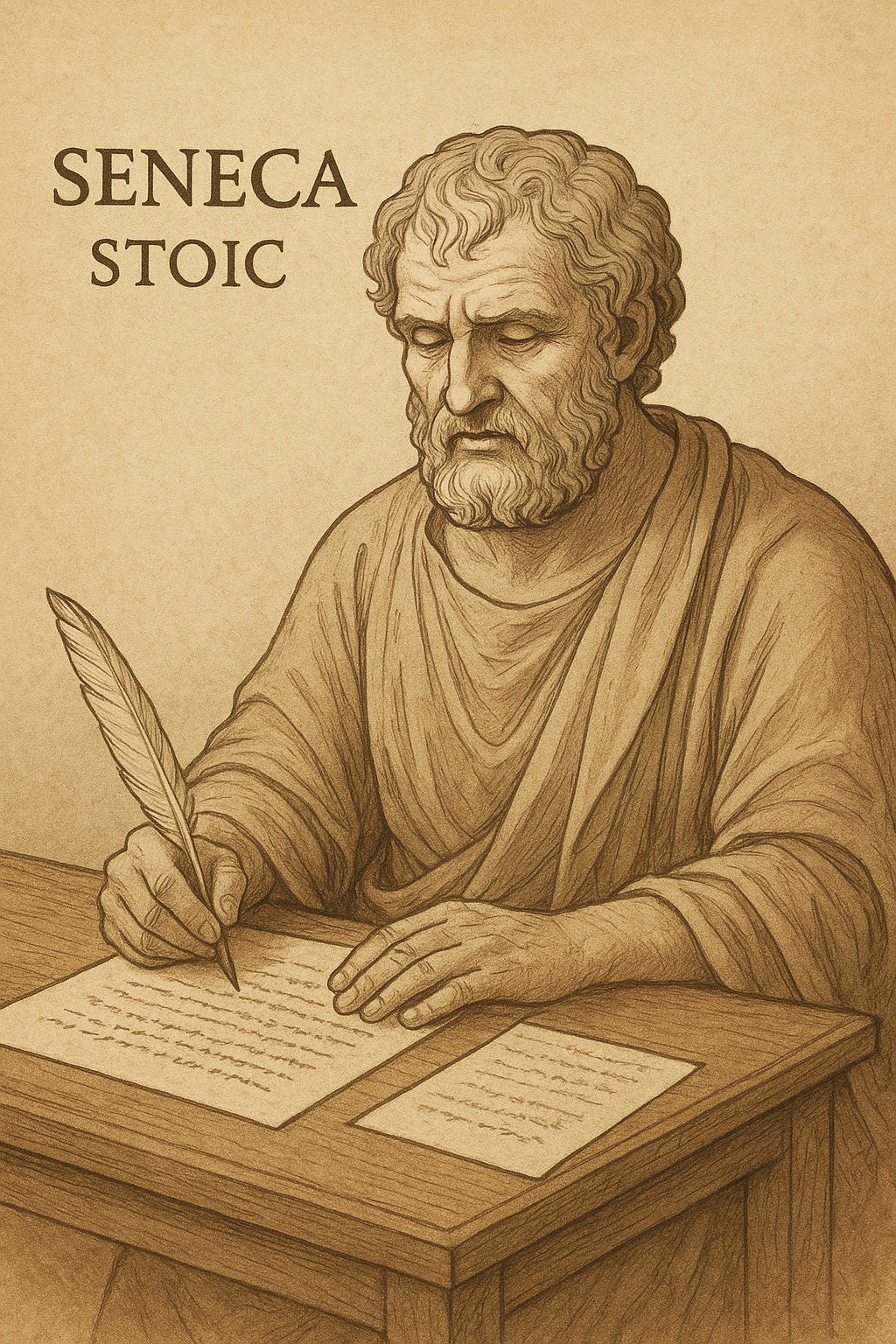
Over the past 20 years, there’s been a steady rise in those who work with coaches — supporting, challenging, and developing them. We’ve given these people many names, but today they’re often known as coach developers. It’s an evolving craft — not yet fixed, and perhaps that’s what makes it so human and point of difference to other approaches to support coaches.
Some coach developers work where the coach comes to them — attending a programme, a workshop, or a course designed for learning. Others do their work by going to the coach — walking alongside them in their environment, in the rhythm and reality of practice. Both are important, both are demanding, and both ask a question that few of us ever stop to ask:
Who develops the coach developer?
When I began this journey, I remember wondering if there was some hidden college — a secret coach developer retreat tucked away in the Brecon Beacons — where you’d spend two years learning the mysteries of mentoring, facilitation, and learning design, before emerging ready to make a difference.
In reality, of course, there is no such college. There’s no map, no formal graduation, no badge that confirms mastery. You make the road by walking — as the poet Antonio Machado once wrote — step by step, encounter by encounter. Each conversation, each coach, each mistake adds a new piece to the puzzle of how to help others grow. And that’s really what this little article is about.
These 20 nudges are inspired by the Letters from a Stoic — the writings of Seneca, a Roman philosopher and statesman who believed that wisdom was not about knowing, but about living well. Seneca’s letters were written as guidance to a friend — short reflections on how to think, act, and respond in the world.
In many ways, that’s what coach developers do too. We write and speak our own living letters — through questions, observations, challenges, and reflections. We work in the space between potential and practice, trying to draw out what’s already within someone.
So, what follows are twenty Senecan nudges — each built around a quote from Letters from a Stoic, with a reflection for the world of coach development. They’re not rules or frameworks. They’re simply invitations to think, pause, and look again at your craft — how you listen, how you challenge, how you help others to grow.
If you’re reading this, you’re already walking the same road — the long road of those who care about learning, growth, and the passing on of wisdom.
May these nudges help you travel it with a little more steadiness, patience, and perspective.
Twenty Senecan Nudges for the Coach Developer
The Presence That Endures
“Happy is the man who improves others not merely when he is in their presence, but even when he is in their thoughts.” — Letter XI
The Stoic Sense: True influence endures beyond immediacy.
The Coaching Nudge: Great coach developers shape reflection that continues long after the conversation ends.
Reflective Question: How might your influence remain when you’re no longer in the room?
The Stewardship of Time
“It is not that we have a short time to live, but that we waste much of it.” — Letter I
The Stoic Sense: The issue isn’t time’s length, but our use of it.
The Coaching Nudge: Help coaches focus their limited energy on what truly matters — relationships, reflection, and purposeful practice.
Reflective Question: Where does most of your time as a developer actually go — and what does that say about your priorities?
The Company That Shapes Us
“Associate with people who are likely to improve you.” — Letter VII
The Stoic Sense: We become like those we surround ourselves with.
The Coaching Nudge: Connect coaches with peers who stretch their thinking and challenge their norms.
Reflective Question: Who sharpens you, and who softens you? Which do you need more of right now?
The Art of Stillness
“Nothing is a better proof of a well-ordered mind than a man’s ability to stop just where he is and pass some time in his own company.” — Letter II
The Stoic Sense: Stillness is strength, not weakness.
The Coaching Nudge: Encourage coaches to pause before reacting — to think deeply before deciding.
Reflective Question: When was the last time you allowed silence to do the teaching?
The Quiet Example
“The wise man is content with himself.” — Letter IX
The Stoic Sense: Calm confidence is a sign of wisdom.
The Coaching Nudge: Model composure — the emotional steadiness you hope coaches will pass to athletes.
Reflective Question: What does your presence teach before you say a word?
The Depth of Learning
“You must linger among a limited number of master-thinkers and digest their works.” — Letter II
The Stoic Sense: Depth, not volume, builds wisdom.
The Coaching Nudge: Help coaches stay with a few ideas long enough to apply and embody them.
Reflective Question: Which ideas have you truly lived with long enough to make your own?
The Courage to Begin
“How long are you going to wait before you demand the best for yourself?” — Letter XXIII
The Stoic Sense: Growth begins with personal resolve.
The Coaching Nudge: Encourage coaches to take ownership of their development — don’t let them outsource their ambition.
Reflective Question: What are you postponing that would move your practice forward?
The Measure of Enough
“It is not the man who has too little, but the man who craves more, that is poor.” — Letter II
The Stoic Sense: Contentment, not accumulation, brings peace.
The Coaching Nudge: Help coaches focus on mastery with what they have rather than chasing more tools, tech, or theories.
Reflective Question: What would “enough” look like in your current work?
The Teacher in Adversity
“Fire tests gold, misfortune tests brave men.” — Letter LXVI
The Stoic Sense: Challenge refines character.
The Coaching Nudge: Support coaches to view pressure and setbacks as teachers, not threats.
Reflective Question: How can you help coaches use tough moments as material for growth?
The Hidden Chains
“Show me someone who isn’t a slave. One is a slave to lust, another to greed, another to ambition.”— Letter XLVII
The Stoic Sense: True freedom is internal.
The Coaching Nudge: Explore what silently drives your coaches — validation, perfection, fear — and how it shapes their practice.
Reflective Question: What might be quietly enslaving your own approach to development?
The Power of Example
“Long is the road through precepts, short and effective through examples.” — Letter VI
The Stoic Sense: People follow models more than messages.
The Coaching Nudge: Be what you want others to become — your conduct teaches more than your curriculum.
Reflective Question: What might someone learn about development simply by observing you?
The Quality of Effort
“As is a tale, so is life: what matters is not how long it is, but how good it is.” — Letter XCIII
The Stoic Sense: Excellence is qualitative, not quantitative.
The Coaching Nudge: Focus on the depth of engagement, not the duration of programmes.
Reflective Question: What would happen if you valued depth of learning as much as coverage?
The Strength of Self-Control
“No man is free who is a slave to his body.” — Letter XV
The Stoic Sense: Discipline is the foundation of freedom.
The Coaching Nudge: Help coaches recognise how their emotions influence behaviour and decision-making.
Reflective Question: When under pressure, what controls you — values or emotion?
The Patience of Process
“Nothing great is created suddenly.” — Letter LXXXIII
The Stoic Sense: Enduring things require enduring patience.
The Coaching Nudge: Guide coaches to see growth as seasonal, not instant.
Reflective Question: What are you nurturing now that might take years to flower?
The Mirror of Others
“Men learn while they teach.” — Letter VII
The Stoic Sense: Teaching reveals our own understanding.
The Coaching Nudge: Encourage coaches to mentor others — teaching deepens their learning.
Reflective Question: What have you discovered about your own craft by helping someone else learn?
The Constancy of Principle
“A good character, when established, is not easily overthrown.” — Letter CXX
The Stoic Sense: Integrity is sturdier than circumstance.
The Coaching Nudge: Support coaches in clarifying their principles — consistency under pressure builds trust.
Reflective Question: What are the non-negotiables that anchor your practice?
The Measure of Wisdom
“To be everywhere is to be nowhere.” — Letter II
The Stoic Sense: Focus gives presence its power.
The Coaching Nudge: Encourage clarity and simplicity — help coaches focus on fewer things done better.
Reflective Question: Where is your attention most scattered, and what might focus restore?
The Gift of Perspective
“We suffer more often in imagination than in reality.” — Letter XIII
The Stoic Sense: Fear distorts perception.
The Coaching Nudge: Help coaches reframe uncertainty — not as danger, but as the natural terrain of performance.
Reflective Question: How might you help coaches separate imagined fears from real challenges?
The Use of Failure
“No man is crushed by misfortune unless he has first been deceived by prosperity.” — Letter XCII
The Stoic Sense: Comfort breeds fragility.
The Coaching Nudge: Build resilience through reflection on failure — make difficulty a teacher, not a verdict.
Reflective Question: How can you normalise failure as a learning ally?
20. The Circle of Influence
“He who is brave is free.” — Letter LXXVII
The Stoic Sense: Freedom lies in acting with courage within one’s control.
The Coaching Nudge: Empower coaches to act wisely in their sphere of influence rather than lamenting what they can’t control.
Reflective Question: What would change if you and your coaches focused only on what’s within your control?
In Closing
In Seneca’s letters, wisdom was not distant philosophy — it was practical guidance for living well. These twenty nudges are written in that same spirit: to help coach developers slow down, look deeper, and find meaning in the ordinary moments of practice.
As Seneca might have said:
“The wise man does not gaze at the stars to find direction — he finds it in how he walks each day.”